
Back to all lawyers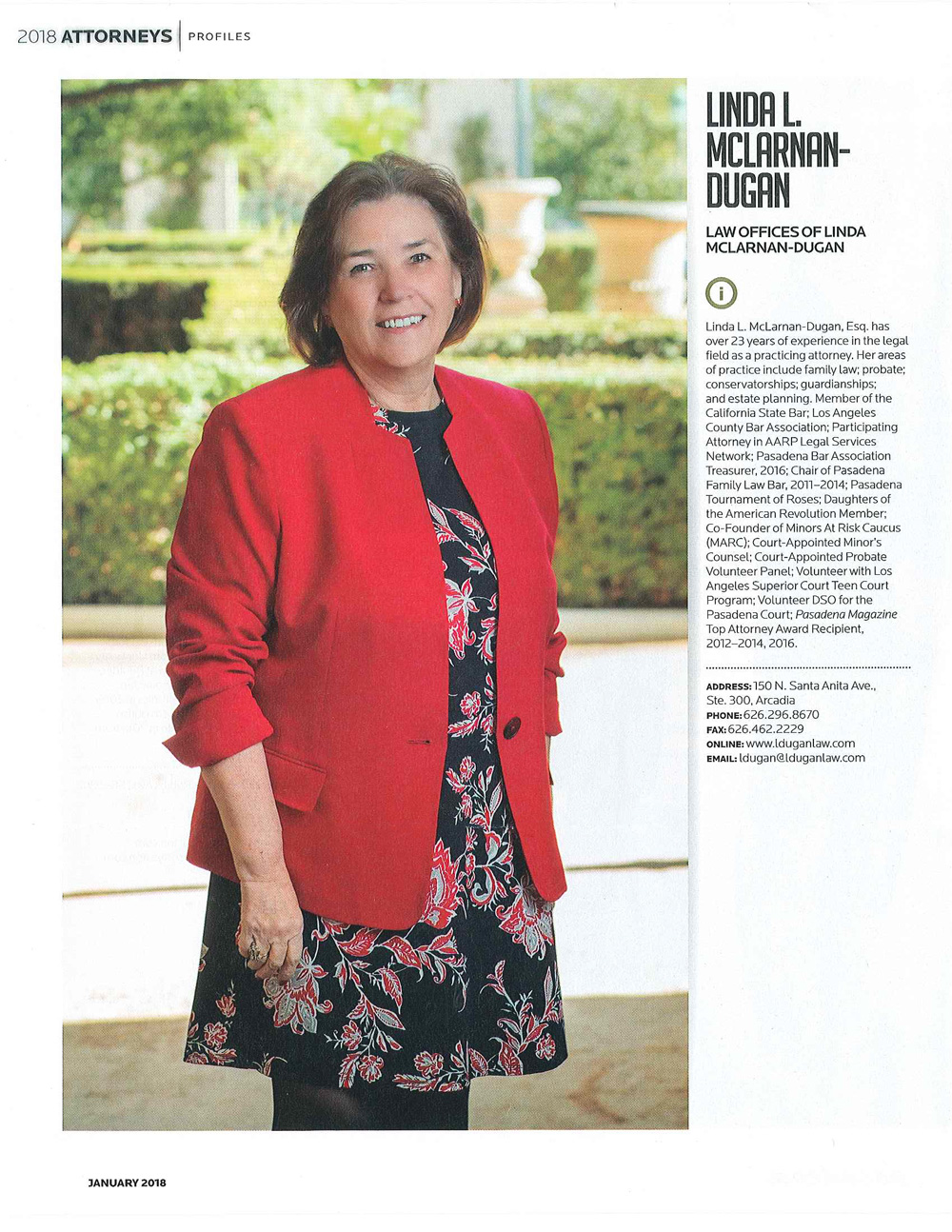
North El Monte, CA
Linda Mclarnan-Dugan
- Divorce and Separation
- Child Custody and Visitation
- Child Support | Child Support Enforcement
- Paternity Actions
- Guardianship and Conservatorship
- 33 years' experience
- Accepting new clients
Contact info
About
Linda L. McLarnan-Dugan is the founder of Dugan Law in Arcadia, California, and has been a member of the State Bar of California since December 1993. She earned her J.D. from the University of West Los Angeles College of Law (1992) and her B.A. in International Relations from the University of Southern California (1987). Her practice covers family law matters such as divorce, custody, and support, alongside estate planning, wills, trusts, and probate/guardianship work. She has volunteered with the Los Angeles Superior Court Domestic Violence Project and served as court-appointed minor's counsel.
Practice areas
- Divorce and Separation
- Child Custody and Visitation
- Child Support | Child Support Enforcement
- Paternity Actions
- Guardianship and Conservatorship
Awards & recognition
- Featured, Pasadena Magazine's Top Attorneys
Bar admissions
- Bar no. 169190
Education
- J.D., University of West Los Angeles College of Law, 1992
- B.A. International Relations (minors in Russian, Defense & Strategic Studies), University of Southern California, 1987
Service offers
- Accepting new clients
Ready to connect with Linda?
- Pre-screened & verified attorneys
- Completely confidential
- Free to search, no account required
- Exclusively divorce specialists
Questions
Frequently asked questions about divorce in California
While you can represent yourself, having a lawyer is highly recommended, especially with children, significant assets, or contested issues. A lawyer ensures your rights are protected.
Bring financial documents (tax returns, bank statements, pay stubs), property records, prenuptial agreements if applicable, and a list of questions and concerns about your situation.
Yes, California is a community property state. This means most assets and debts acquired during marriage are considered jointly owned and typically divided 50/50 in divorce.
Are you a family lawyer? Your story is your edge.For lawyers